
For years, electric cars were judged by what they could not do. Not enough range. Too much charging hassle. Batteries that would supposedly wear out early. Too much compromise.
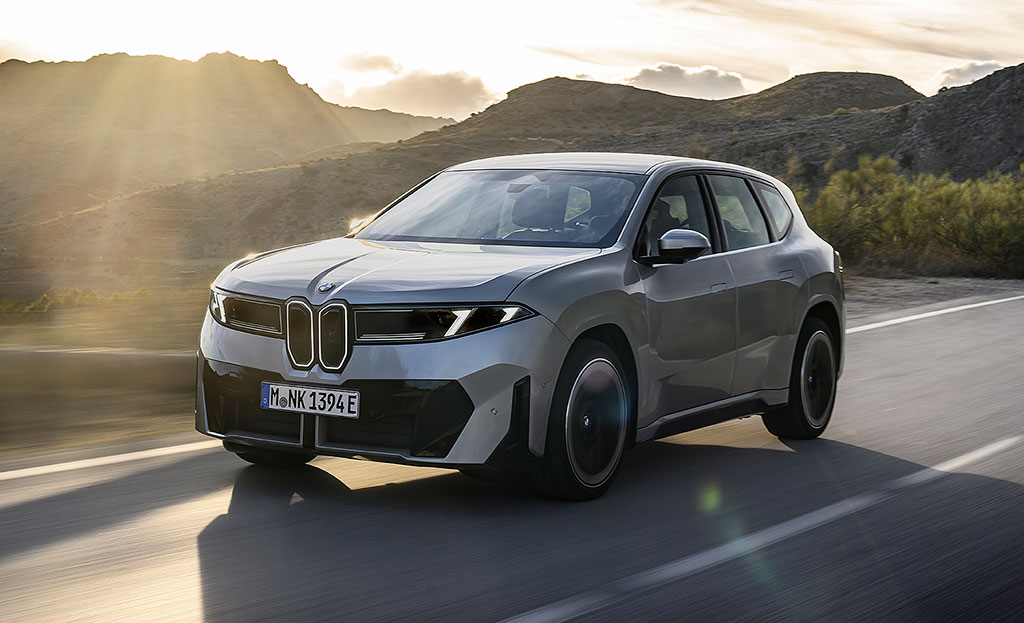
The latest generation of BMW EVs suggests that conversation is changing. BMW’s new iX3 is now being quoted at up to 500 miles WLTP, with up to 400 kW DC charging and a 10% to 80% charge in 21 minutes. The new all-electric i3 Saloon goes even further on paper, with BMW quoting 503 to 562 miles WLTP, up to 400 kW charging, and up to 248 miles of range added in 10 minutes at a suitable high-power charger. BMW also makes clear that these are provisional figures and that real-world results will vary.
That matters because some of the original objections to EVs now look less convincing than they once did, at least when we are talking about the very latest cars. The headline weakness used to be range. On these newest BMWs, that argument is getting harder to lean on.
Battery life is another area where the old myths are starting to look tired. Modern EV batteries do degrade over time, but the idea that they quickly become unusable is not what current data shows. Geotab’s updated 2026 study, based on data from more than 22,700 EVs, found average battery degradation of 2.3% per year. That does not mean every battery will age identically, but it does suggest the old “you’ll need a new battery in a few years” line is far too simplistic.
The same goes for fire risk. The idea that EVs are uniquely prone to catching fire is not backed up by current evidence. Energy Saving Trust says current research indicates the chance of an EV catching fire is considerably lower than for a petrol or diesel vehicle.
But none of that means the ownership picture is solved.
The biggest issues now feel less about the cars themselves and more about the conditions around them. Public charging is better than it was. Zapmap says there were 119,080 public EV chargers in the UK at the end of March 2026, and the UK’s public charge point regulations require rapid network operators to achieve 99% reliability over the year. That is real progress, and it matters.
Even so, public charging still carries two obvious headaches: convenience and cost. BMW itself notes that high-speed public charging stations are still available in limited numbers in the UK, most commonly around high-traffic areas such as motorway services. And the pricing gap remains hard to ignore. Zapmap says the weighted average pay-as-you-go public charging price in March 2026 was 54p/kWh on slower chargers and 76p/kWh on rapid and ultra-rapid chargers, which it says works out at about 16p and 23p per mile respectively.
That is why home charging still feels like the real dividing line. If you can charge at home, especially on a good overnight tariff, the ownership case is much stronger. If you cannot, and you are leaning heavily on public rapid charging, the convenience and running-cost story becomes much less clear-cut. The cars may have moved on quickly, but the day-to-day ownership experience still depends heavily on where you plug in.
There is also a wider market shift happening around all this. Chinese manufacturers are no longer a side story. Reuters reported that Chinese brands reached around 11% of all new car sales in Britain in 2025, roughly doubling their market share year on year. That matters because it increases competitive pressure on European brands, both on pricing and on the speed of development.
And that pressure is not theoretical. BYD’s latest Blade Battery 2.0 announcement talks about ranges of more than 621 miles / 1,000 km and extremely fast charging. But it is important to keep that claim in context: BYD’s figure is based on the Chinese CLTC test, not WLTP, so it is not a direct like-for-like comparison with BMW’s UK figures. Still, the broader point stands: the pace of improvement is rapid, and Chinese brands are helping to set it.
So, is this the point where more people switch?
For some drivers, probably yes. The newest EVs are making many of the old objections look weaker than they did a few years ago. But that does not mean every concern has disappeared. Public charging is still expensive. Home charging is still a major advantage. And huge headline range does not automatically remove the everyday practicalities of how a car fits into your real life.
Our view
The latest EVs show just how quickly the technology is moving on. Some of the older objections now look far less convincing than they once did, particularly around range, charging speed and long-term battery life. But that does not mean every ownership challenge has disappeared.
From our point of view, the real question is no longer simply whether an EV is “good enough”. It is whether it fits the way you actually use your car. For drivers with easy home charging, the ownership case now looks very compelling. For drivers who would rely heavily on public charging, the compromises can still be harder to ignore. And beyond all of that, some people simply prefer the feel of an ICE car – and that is a perfectly valid part of the conversation too.
That is why this needs to be a facts-led conversation: less myth, less hype, and more honest information about what has improved, what still has not, and which type of ownership setup an EV really suits.
Sources
- BMW UK – The new BMW iX3
- BMW UK – The new BMW i3 Saloon
- Geotab – Updated analysis finds average battery degradation of 2.3% per year
- Energy Saving Trust – Are electric vehicles a fire risk?
- Zapmap – How many EV charging points are there in the UK?
- Zapmap – UK EV charging price index
- Reuters – Where Chinese automakers have gained the most ground in Europe
- BYD UK Media – Blade Battery 2.0 and FLASH Charging announcement