

It’s been two years since we bought our first EV, and I thought it was time for a bit of real-world honesty.
Now, to be clear, we didn’t buy an EV sensibly. We did it as an experiment and I broke all the sensible rules. I ignored every single horror story and bought an old and cheap one. Curiosity got the better of common sense. But it was going to be our second car, with our main vehicle still being a trusty ICE variant.
I wasn’t being completely idiotic either; tinkering with cars is my hobby. I’ve pulled apart everything from modern cars to old classics. So, when EVs started becoming more popular I wanted to see what they were really like under the skin. Cue the purchase of a high-mileage, out-of-warranty electric car. According to most of the internet, I’d just bought myself a very expensive paperweight.
Meet Our Experiment: The BMW i3 REX
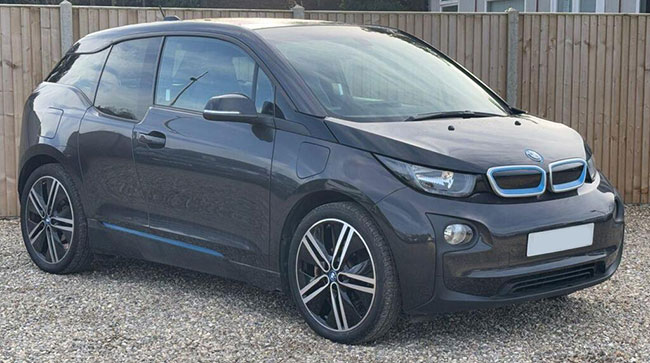
We ended up with a 2015 BMW i3 REX. The “REX” bit stands for Range Extender – essentially a cheat code for early EVs. Under the boot floor sits a tiny petrol generator that charges the battery on the go. It doesn’t drive the wheels, just keeps the juice flowing when the battery runs out.
At the time, we weren’t fully sold on going all-electric, especially with an older, small-capacity battery. The idea of a built-in “get out of jail” card, a miniature petrol engine that could rescue us when needed, seemed ideal.
Two Years, 13,000 Miles, and… No Drama
So how’s it gone? Disaster? Breakdown city? Not even close. It’s been brilliant.
We’ve driven 13,000 miles in it since purchase. The battery’s now got 106,000 miles and 10 years under its belt, and it’s still holding 88% of its original capacity and interestingly, that figure hasn’t changed since purchase. When we bought it, my plan was to get the battery fixed if it ever started to fade. I’d already found plenty of small engineering companies around the UK that specialise in repairing or refurbishing EV batteries – replacing failed modules rather than the whole pack. That sort of cottage industry didn’t exist when EVs first appeared, but it’s growing fast.
The only forced repair so far has been an air-conditioning radiator hit by a stone, same story as any other car. The rest has been elective maintenance: refreshing suspension bits and replacing shocks, which I’d do on anything I own anyway. I’ve also replaced the tyres, they’re slightly unusual EV-specific ones, narrower and lower rolling resistance, but even then, a set of premium-brand tyres came in at £131 each. A comparable high-quality tyre for a normal car would be around £80–£100, so not exactly bank-breaking.
And that’s it. Nothing else. The “service” was almost comical, top up a bit of coolant, look at the brakes, and… well, that’s about it.
About That Tiny Battery…
Yes, it’s small. We get about 60–70 miles on electric power alone. But here’s the twist: we almost never use the range extender. I assumed we’d be living on it. Turns out, when you hop into the car each morning and it’s already at 100%, you stop worrying.
We plug it in at night, it quietly slurps electrons while we sleep, and it’s ready to go by breakfast. Most of our daily trips are under 30 miles, so it never feels restrictive.
And the cost? Ridiculous. We’re on an overnight tariff of 6.75p per kWh, so a full charge costs about £1.35. It has the feeling of driving around for almost free.
Going the Distance
When we do need to travel further – like taking my daughter back to uni (a 500-mile round trip) – that’s when the cheat code shines.
A full petrol top-up for the generator costs around £10 and adds roughly 80–90 miles of range. Combine that with a 15-minute charging stop for a quick top-up, and you’re good for another 150 miles. Realistically, it’s one extra stop compared with a normal petrol car. Hardly the end of civilisation.
And the charging experience at public chargers has never been a problem. Always found one. On the odd occasion a charger hasn’t worked, we’ve just moved to a new one. Plug in, tap your card and go get some food. On one occasion my KFC took longer to arrive than the car took to charge!
I think the issues with public chargers were real. But in my experience those have been ironed out. Public charging whilst still expensive, isn’t an issue. And the point is you don’t often use them.
The i3 Itself
As an actual car, it’s a riot. Smooth, silent, and deceptively quick, a proper “grin every time you drive it” stuff. I once read that from 30–70 mph it’s quicker than a BMW M4. I’ve no idea if that’s true, but it feels believable, and it still makes me laugh.
BMW might have gone bigger and flashier with later EVs, but the i3 was genius. If every EV had that little “REX” backup in the boot, I honestly think the world would have embraced electric cars much sooner.
And yes, i do ‘pub chat’ about it having a carbon fibre monocoque. Something only supercars and F1 cars have. (see, still a petrol head!)
A Bit of Perspective
Whenever we write about EVs, we brace for the usual abuse – tin hats at the ready. So let me be clear: this isn’t an evangelist’s sermon. I’m not saying everyone should run out and buy one.
I’m keeping my old 911, thank you very much. Petrolheads will always have a place. But the endless doom stories about EVs being unreliable money pits? In our experience, it’s just not true.
If you’re someone who uses a car to get from A to B, has a driveway or somewhere to charge, and values low running costs, an EV can make an awful lot of sense.
Would We Buy Another?
Honestly, yes. In fact, we’ll probably never sell this one. The i3’s carbon-fibre body means it’ll never rust, and newer replacement battery packs are hitting the market that can stretch its range from 70 miles to over 300 miles (Although not sure i’d trust them yet, but you see the direction of travel) And it still drives like new. I’m used to old cars rattling around when they get old. Not this one.
That’s the mad thing – the “old” EV we bought as a curiosity might actually outlive most modern cars. Not bad for something that was supposedly destined for the scrapheap.