
🚨 Safety Recalls: Are You Affected?
Several major recalls have hit UK drivers recently:
- Citroën & DS: More cars added to the “do not drive” list due to dangerous Takata airbags.
- Renault: Five models recalled (Austral, Captur, Megane E-Tech, Scenic E-Tech, Rafale) for parking brake issues that could let cars roll.
- JLR: Around 31,000 models recalled for a power inverter software fault that could affect electrical reliability.
- Peugeot: Some models recalled for engine-management software updates and potential camshaft chain wear.
If your car is affected, you’ll normally get a letter in the post from the manufacturer with instructions on booking a free fix. You can also check recalls any time on the official Gov.UK recall service.
Recalls are free to fix, but many owners miss them or delay repairs. If your car is affected, book it in as soon as possible to avoid risk and inconvenience.
💷 New Tax Rules for EVs & Low Emission Cars
From April 2025, electric vehicles will no longer be exempt from Vehicle Excise Duty (car tax).
- First year: £10 (lowest band).
- From year two: the standard annual rate applies (currently £190).
- Expensive car supplement: Cars with a list price over £40,000 will pay an additional £390 per year for five years, on top of the standard rate.
If you’re planning to go electric, it’s worth factoring these new costs into your budget now – especially if you’re looking at higher-spec models that cross the £40k threshold.
⚡ EV Grants Back on the Table
The government has announced a new electric car grant worth up to £3,750, but it only applies to a limited list of approved models priced under about £37,000. The grant scheme is divided into two tiers: some cars qualify for the full £3,750 (Band 1), others for a smaller discount of £1,500 (Band 2). The exact amount depends on the car’s sustainability credentials and whether the manufacturer meets required criteria.
Some of the first cars confirmed include the Ford Puma Gen-E and Ford E-Tourneo Courier, which qualify for the full £3,750.
This list of confirmed cars is embarrassingly small at the moment. But expect this list to grow quickly. (We hope).
If you’re considering an electric car, it’s a good idea to check whether the specific model is on the government’s approved list – not all EVs will qualify under this scheme. Here’s the link to the official list of vehicles currently eligible for the grant:
Gov.uk: list of cars eligible for the Electric Car Grant GOV.UK
📜 Driving Law Changes You Might Have Missed
Insurance transparency & fairness – FCA actions
The FCA’s “no price-walking” rules remain in force (renewal quotes can’t exceed equivalent new-customer prices via the same channel), and regulators have tightened scrutiny of claims handling transparency in 2025 following a multi-firm review of rising claims costs. There’s also fresh attention on premium-finance fairness (monthly payers) to avoid opaque extra charges. (FCA)
Congestion Charge (London) – proposals under consultation
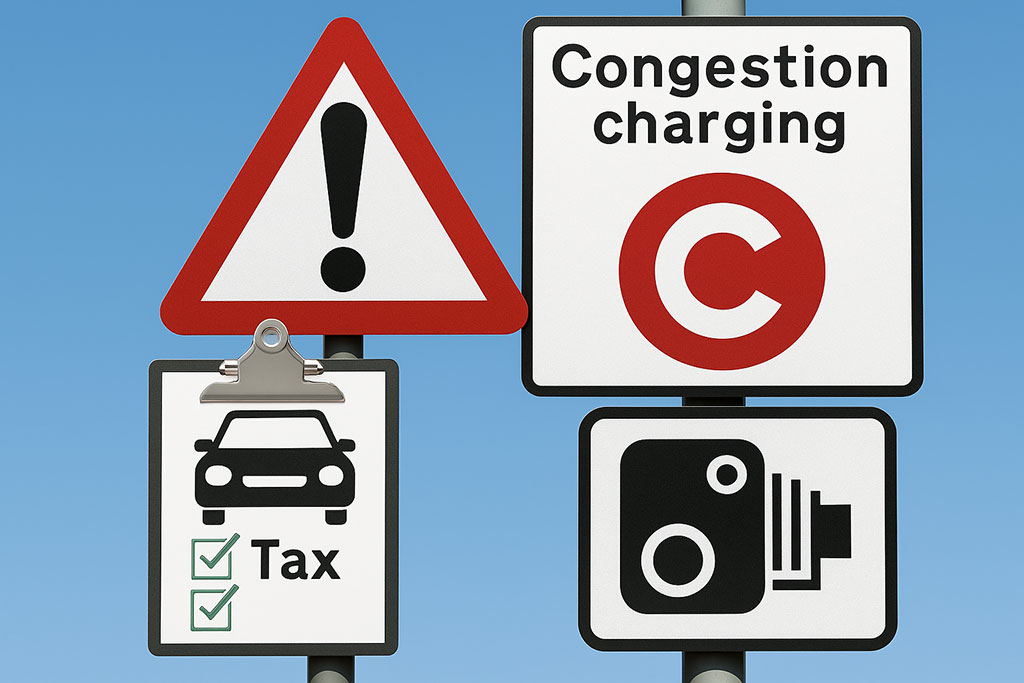
TfL is consulting on changes that include raising the daily charge from £15 to £18 (target start 2 Jan 2026) and revising discounts (e.g. tighter rules around the cleaner-vehicle and residents’ discounts). Nothing is final yet, but it’s one to watch. Current operating hours remain 07:00–18:00 Mon–Fri and 12:00–18:00 weekends/bank holidays. (Transport for London)
EV company-car tax (Benefit-in-Kind) – stepped increases
From 6 April 2025, the BiK rate for fully electric company cars rose from 2% to 3%, then rises to 4% in 2026/27 and 5% in 2027/28 (confirmed by HM Treasury). Industry guidance also indicates further rises to 7% in 2028/29 and 9% in 2029/30. (GOV.UK)
✅ Staying Ahead
With safety recalls, new tax rules, fresh incentives, and law changes all arriving at once, it’s worth taking a moment to check what applies to you and your vehicle. A few minutes now could save money, keep you compliant, and help avoid unexpected problems later.