

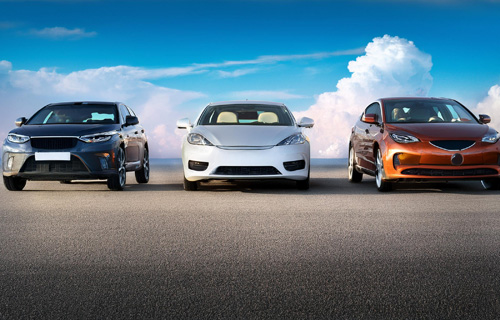
I’ll start by saying this: we’re not here to push any particular vehicle type. Whenever we talk about EVs, we feel the need to grab our tin hats and take cover! This article is purely about laying out the facts and giving you the tools to make informed choices. No one powertrain type is right for everyone—so please, go easy on us.
This month, we’re tackling the big question: which type of car—petrol, diesel, hybrid, or electric—best fits your needs? We’ll break down running costs, highlight what to watch for when buying second-hand, and help you understand the pros and cons of each option. Whether you’re on the hunt for a reliable commuter car or considering making the leap to an EV, we’ve got the details you need to make the right decision.
Let’s start by comparing the running costs of a typical two-year-old VW Golf & ID3 across different powertrains, based on 12,000 miles per year:
Running Costs Comparison (2-Year-Old VW Golf)
| Vehicle | Type | AVG Price | Service | TAX | Depreciation (1yr) | Insurance | Fuel | Price per mile |
|---|---|---|---|---|---|---|---|---|
| VW Golf 1.5 TSI | Petrol | £15,803 | 299 | 190 | £1,540 | £391 | £1,551 | £0.33 |
| VW Golf 2.0 TDI | Diesel | £16,769 | 289 | 190 | £537 | £390 | £1,304 | £0.23 |
| VW Golf 1.5 eTSI | Hybrid | £18,250 | 299 | 180 | £1,293 | £433 | £1,446 | £0.30 |
| VW Golf 1.4 GTE | Plug-in Hybrid | £22,000 | 299 | 180 | £1,892 | £476 | £921 | £0.31 |
| VW ID.3 (Home charge) | Electric | £17,243 | 153 | 0 | £1,012 | £386 | £277 | £0.15 |
| VW ID.3 (Public Charge) | Electric | £17,243 | 153 | 0 | £1,012 | £386 | £2,747 | £0.36 |
NOTES: EVs Home charge used a EV specific tariff (8p / kwh) and Plug-ins we used 50% electric only and 50% petrol.
Key Takeaways
- Fuel Costs: EVs charged at home are the cheapest to own over a year, while public charging EVs are the most expensive (Note home charge was calculated on a cheap home EV tariff). How crazy is that public charging figure. Sure, it’s an extreme case as most EV owners will rarely only charge using public chargers, but even so that’s a shocking figure. This supports our position that unless you can home charge, EVs are problematic.
- Purchase Price: Petrol cars are still the most affordable upfront, though for the first time EV prices are now competitive in the second-hand market.
- Servicing & Tax: EVs have lower maintenance and tax costs, though upcoming tax changes will narrow the gap.
- Depreciation: We need to be careful here. This deprecation figure was based on one year. The VW ID.3 hasn’t been around long enough to know it’s long term depreciation. So please take these figures with a note of caution. This said, EVs show significant depreciation when new but stabilise once in the second-hand market. The Hybrids seem to have the highest depreciation, probably because they are extremely complicated with lots to go wrong.
- Insurance: Surprisingly, The EV had lower insurance costs than its ICE counterparts. We used a 30yr old male with 10yrs of no-claims as the basis, but with insurance it’s very important to always check your personal circumstances, this could easily change the results.
A Note on Maintenance Costs
We’ve deliberately left out certain ad-hoc maintenance costs because making accurate side-by-side comparisons is tricky. That said, here are a few points worth noting:
- Tyre Wear: EVs and ICE cars do have slight differences in tyre wear, but they’re not overly significant.
- Unexpected ICE Repairs: Traditional petrol and diesel cars have far more components that can fail unexpectedly.
- EV Battery Concerns: While EVs raise questions about battery longevity, our research suggests these concerns are often overplayed—particularly for younger EVs, which are still covered under 8yr warranties. Additionally, a growing number of businesses now specialise in battery repairs at a fraction of the replacement cost.
For vehicles in the 2–5-year age range, these factors don’t typically play a significant role, which is why we’ve left them out of this article. However, we do plan to explore these issues in much greater detail in future pieces.
What to Look for When Buying a Used Car
Petrol Cars
A safe, reliable choice for most buyers.
- Service History: Look for evidence of regular oil changes and spark plug replacements.
- Mileage: Beware of cars between 70k and 100k miles unless major components (like the clutch) have been replaced. (Read our previous article on this)
- Common Issues: Worn timing belts, emission control components, clutches.
Diesel Cars
Efficient for long journeys but risky for short trips.
- Mileage History: Avoid cars primarily used for short commutes, as this can lead to clogged Diesel Particulate Filters (DPFs).
- Emission Standards: Ensure the vehicle meets local emission zone rules.
- Key Parts: Check for repair history of DPFs and EGR valves. Also, modern diesels are complicated bits of kit. In order to meet modern emission standards they have a lot of wizardry to stop as much nasty stuff reaching the atmosphere, and all that stuff isn’t cheap to repair.
Hybrids
A middle ground offering efficiency without full EV commitment.
- Battery Health: Ask for test results and replacement history; hybrid replacement batteries can be scarce and expensive. We personally know of someone with a Range Rover that’s been stuck at the dealers for over 6 months waiting for that little hybrid battery to be replaced!
- Plug-ins: It’s ALL about ‘if‘ you charge the battery and how far you drive on it. If you mainly do short journeys within the battery range, then they work. If you don’t, then they don’t make sense.
- Other Issues: Consider the same points as petrol cars since hybrids largely rely on traditional engines.
EVs
Affordable and eco-friendly, but with specific needs.
- Battery Capacity: Get a battery health check to ensure adequate range.
- Software: Ensure the car has the latest updates.
- Charging Access: If you don’t have home charging, EVs can be costly and inconvenient to run.
- Efficiency: Not all EVs are equal. Efficiency can vary significantly. Make note of the WLTP range figures (as shown in our app), and then take 20% off as no one EVER gets those predicted ranges. And then take a further 10-20% off in very cold temperatures.
Common Issues Across All Car Types
Vehicle History Check: Don’t skip this crucial step! Always verify that the car isn’t stolen, written off, or still under finance. Using our Vehicle History Checker is a quick and cost-effective way to protect yourself from costly mistakes. With high-quality data at your fingertips, it’s an essential safeguard for any used car purchase.
Insurance Costs: Before you buy, take advantage of our Quick Quote and Full Quote tools. They’re designed to give you a clear picture of your potential insurance costs for specific vehicles. Whether you’re comparing options or trying to reduce costs, our tools can save you money—often far more than sticking with your current insurer.
Both of these features are available right in our app, making it easy to make smarter, more informed decisions when buying a used car.
Final Thoughts
Choosing the right car type depends on your driving habits, budget, and access to infrastructure. Whether it’s the simplicity of petrol, the efficiency of diesel, or the greener appeal of hybrids and EVs, there’s no one-size-fits-all answer.
Use this guide as a starting point to navigate the market and make the best decision for your needs. And as always, run the checks, ask the questions, and don’t rush the process.


4 thoughts on “Which Car Type Is Right for You? A Guide to Choosing Your Next Used Car”
Leave a Reply
You must be logged in to post a comment.
Great article, thanks. I’m just about to change my car, wasn’t sure whether to stay with diesel or go back to petrol. As most of our journeys are local, and I’ve had the DPF light go on a couple of times, I’ve decided to go for petrol. Thanks again.
Thanks for your comment. Yea, for local journeys we’d steer clear of diesels and some of the modern petrols are really quite efficient.
I have a diesel plug-in hybrid (there are not many about) and the fuel costs are interesting.
I only use diesel (at £7.50 per gallon) when I tow a caravan. That gives about 32 miles per gallon.
When I put £7.50’s worth of (home) electricity in the car it does 297 miles… but only 26 miles per charge – which isn’t much but meets my daily commuting needs*.
On the other hand, £7.50’s worth of electricity from a charge point takes me 30 miles.
Diesel goes 32 miles.
Off peak electricity 297 miles
Charge point electricity 30 miles
*Notable reduction in electricity consumption since urban Wales introduced 20 mph zones.
Great insight there, many thanks for sharing. Home charging makes all the difference. Your use case is perfect example of why PHEVs can work well. EVs are terrible at towing. Well, they can do it, but efficiency goes out the window.